
Quick Answer
- What it is: A UNESCO World Heritage fortress wall encircling central Suwon — 5.7km of walkable ramparts built in 1796
- From Seoul: 30–40 minutes by subway (Line 1 to Suwon Station) or KTX
- Entry fee: ₩1,000 adults — one of the cheapest UNESCO sites anywhere
- Full wall walk: 2–3 hours at a comfortable pace
- Best combined with: Haengridan-gil street (10 minutes walk from the fortress)
Suwon Hwaseong gets treated as a half-day side trip from Seoul — arrive, take photos of the main gate, leave. That is the wrong way to do it. The fortress wall is 5.7km of almost entirely walkable ramparts with watchtowers, cannon platforms, and elevated views over the city. The engineering is extraordinary and the context — built by King Jeongjo as a tribute to his father — gives it emotional weight that most Korean tourist sites lack. Budget a full day. Walk the whole wall.
What Is Hwaseong Fortress?
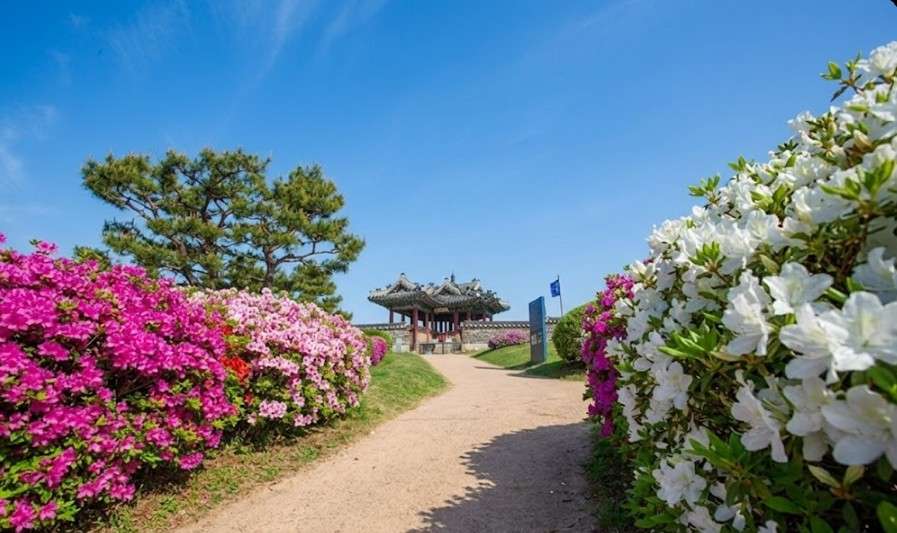
Hwaseong (화성) means “magnificent castle” and the name is accurate. Construction began in 1794 under King Jeongjo of the Joseon Dynasty and was completed in 1796 — unusually fast for a project of this scale. The king built it around the tomb of his father Crown Prince Sado, who had been executed by his own father (Jeongjo’s grandfather) in one of the most tragic episodes of Joseon history. The fortress was both a military installation and a statement of filial devotion.
What makes Hwaseong architecturally significant is the combination of traditional Korean fortification techniques with newly introduced Chinese and Western military engineering concepts. The result is a fortress that incorporated the most advanced defensive technology of its era — watchtowers with overlapping fields of fire, concealed gates, elevated cannon platforms, and a design that eliminated blind spots that plagued earlier Korean fortifications.
It was designated a UNESCO World Heritage Site in 1997. Unlike many UNESCO sites in Korea that require imagination to appreciate, Hwaseong is visually immediate — you can walk the wall, touch the stone, and understand the scale directly.
The Full Wall Walk
The complete circuit of the fortress wall is 5.7km and takes 2–3 hours depending on your pace and how long you spend at each structure. Most visitors do a partial section — the eastern wall from Paldalmun to the hill section is the most popular. The full circuit is significantly better.
Starting point: Paldalmun (팔달문) — the south gate, located in the middle of a functioning road intersection. The contrast between the 18th-century gate and modern traffic around it is striking and very Korean.
The hill section (서북각루 to 장안문): The northwest section of the wall climbs Paldal Mountain and offers the best elevated views. This is the most physically demanding section — proper shoes matter here — and the most rewarding. The watchtowers on this stretch are the best preserved.
Hwahongmun (화홍문): The water gate on the northern wall — seven arched sluices over the Suwoncheon stream. One of the most photographed structures in Hwaseong and genuinely beautiful. Visit this in the morning when the light is on the water.
Banghwasuryujeong Pavilion (방화수류정): A command post pavilion at the northeast corner of the wall, built at an angle to maximize the field of view over the surrounding terrain. Architecturally one of the most interesting structures in the complex — the irregular shape was intentional, designed for observation rather than symmetry.
Dad’s Local Tip: Walk the wall counterclockwise starting from Paldalmun — you hit the hill section while your legs are still fresh and finish with the flat northern section near Hwahongmun. Clockwise means climbing the hill at the end when you are already tired. The direction matters more than people expect on a 5.7km walk.
Key Structures
| Structure | Korean | What It Is |
|---|---|---|
| Janganmun | 장안문 | North gate — largest of the four main gates |
| Paldalmun | 팔달문 | South gate — surrounded by active road, UNESCO listed separately |
| Hwahongmun | 화홍문 | Water gate with 7 arched sluices — most photographed |
| Banghwasuryujeong | 방화수류정 | Corner pavilion — irregular shape, outstanding views |
| Seojangdae | 서장대 | Western command post — highest point on the wall |
| Hwaseong Haenggung | 화성행궁 | Temporary palace used by King Jeongjo during visits — separate entry ₩1,500 |
Hwaseong Haenggung Palace
The temporary palace (행궁) used by King Jeongjo during his visits to Suwon is located just inside the western wall. It is the largest temporary palace surviving in Korea — 576 rooms at its peak, now partially restored. Entry is separate from the fortress wall (₩1,500) and takes 45–60 minutes to walk through properly.
The palace hosts regular cultural performances including a guard-changing ceremony similar to Gyeongbokgung’s but significantly less crowded. Check the schedule at the entrance — if the timing works, it is worth staying for.
Dad’s Local Tip: The Haenggung guard-changing ceremony runs several times daily and attracts a fraction of the crowd that the same ceremony draws at Gyeongbokgung in Seoul. If you have already seen the Seoul version and found it difficult to watch through the tourist crowds, the Suwon version gives you the same experience from three meters away.
Combining Hwaseong with Haengridan-gil
Haengridan-gil (행리단길) is a café and restaurant street that developed along the outer eastern wall of the fortress over the past decade. The contrast between the 18th-century stone wall and the independent cafés and restaurants built against it makes for an unusual streetscape — genuinely worth an hour after finishing the wall walk.
The street runs roughly parallel to the eastern wall between Paldalmun and the Dongnamgaklu watchtower. Best visited in the afternoon when the cafés are open and the light on the wall is good. Several restaurants here serve local Suwon specialties — galbi (갈비) is the dish most associated with Suwon and the area around the fortress has some of the best versions in the city.
Getting There
By subway: Seoul Metro Line 1 direct to Suwon Station — approximately 60 minutes from Seoul Station, 40 minutes from Sindorim. From Suwon Station, bus or taxi to Paldalmun (10 minutes). The subway is the most practical option for most visitors.
By KTX: Seoul Station to Suwon Station — approximately 25 minutes. Worth it if you are combining Suwon with other stops or have limited time. Standard KTX fare applies.
From Suwon Station to the fortress: Bus 11 or 13 from the station runs directly to the Haenggung area. Taxi is ₩4,000–₩6,000 and the most straightforward option with luggage or in groups.
Practical Information
| Detail | Information |
|---|---|
| Fortress wall entry | ₩1,000 adults / Free for children under 7 and seniors over 65 |
| Haenggung Palace entry | ₩1,500 adults |
| Opening hours | 09:00–18:00 (wall sections may vary seasonally) |
| Best season | Spring (cherry blossoms along the wall) and autumn (foliage) |
| Shoes | Proper walking shoes essential — hill section is uneven stone |
| Time needed | Full day for wall + palace + Haengridan-gil |
Dad’s Local Tip: Visit on a weekday if possible. Hwaseong is significantly less crowded than Seoul’s major palaces on weekdays — you can walk entire sections of the wall without another tourist in sight. Weekend afternoons in spring and autumn are the worst times — the Haengridan-gil café crowd plus fortress visitors creates real congestion around Paldalmun.
Daddy’s Final Note
Hwaseong is the most underrated UNESCO site in Korea. It costs ₩1,000 to enter, it is 40 minutes from Seoul, and you can walk the entire perimeter of an 18th-century fortress in an afternoon. Most visitors spend 90 minutes here and leave having seen two gates and the water gate. Walk the full wall. Go counterclockwise. Bring proper shoes. Have galbi on Haengridan-gil afterward. That is a complete day and one of the better ones available within easy reach of Seoul.