Quick Answer
- Peak season: Late March to mid-April (varies by year and region)
- Most overrun spots: Yeouido (Seoul), Jinhae Naval Base Festival
- Best crowd-free alternatives: Gyeongju, Jeonju, Chuncheon, residential Seoul neighborhoods
- Bloom forecast: Check the KMA (Korea Meteorological Administration) cherry blossom forecast — updated annually from early March
- Best day to visit any spot: Tuesday or Wednesday, before 9AM or after 6PM
Every spring, the same two or three spots get plastered across every Korea travel article: Yeouido Hangang Park and the Jinhae Gunhangje Festival. Both are genuinely beautiful. Both are also packed to the point where you are mostly photographing the backs of other tourists’ heads. Korea has hundreds of excellent cherry blossom spots — many of them empty by comparison. Here is where to actually go.
Why the Famous Spots Are Worth Skipping
Yeouido (여의도): The most photographed cherry blossom street in Seoul. On a weekend at peak bloom, the crowd density makes walking in a straight line difficult. The city cordons off sections, manages foot traffic with barriers, and the whole thing becomes more of a crowd event than a nature experience. The trees themselves are beautiful — the experience around them is not. If you insist on going, arrive before 7:30AM on a weekday.
Jinhae Gunhangje Festival (진해 군항제): Two million visitors over ten days. The famous Gyeonghwa Station train photo requires queuing for a long time. The surrounding streets are good — genuinely good — but the logistics of getting there, finding accommodation, and moving through the crowds make this a difficult trip to enjoy unless you plan months in advance and accept that it is a festival, not a quiet walk under cherry trees.
The Better Alternatives
Gyeongju (경주) — Best Overall
The ancient capital does cherry blossom season better than anywhere else in Korea, and a fraction of the people know it. The path along Bomun Lake is lined with cherry trees that reflect in the water with almost no crowds even at peak bloom. The road between Bulguksa Temple and Tohamsan Mountain is another local favourite — cherry blossoms alongside ancient stone walls and pagodas, and the combination is genuinely something you will not find elsewhere in Korea. Gyeongju also has proper accommodation, good food, and enough to do for two or three days. The cherry blossom is a bonus, not the only reason to go.
Jeonju Hanok Village (전주 한옥마을)
The hanok village gets visitors year-round but the cherry blossom crowds are manageable compared to Seoul. The trees along the stream path (Jeonjucheon) running alongside the village are the highlight — traditional Korean rooftiles with cherry blossom overhead, and the only thing in the frame. Walk this stretch early morning and you will have it largely to yourself. Combine with Jeonju bibimbap for breakfast and you have a very good day.
Chuncheon (춘천) — Underrated
Two hours from Seoul by ITX train. Chuncheon does not appear on most cherry blossom lists, which is exactly why it is worth going. The path around Uiamho Lake has long stretches of cherry trees with mountain backdrop and almost no foreign tourists. The city is known for dakgalbi (spicy stir-fried chicken) — eat it for lunch while you are there. Manageable as a day trip from Seoul but an overnight makes it more relaxed.
Ssanggyesa Temple Road, Hadong (쌍계사 십리벚꽃길)
Ten-ri cherry blossom road — a six-kilometre stretch of road leading to Ssanggyesa Temple in South Gyeongsang Province, lined on both sides with cherry trees that form a continuous tunnel overhead. This is one of the most genuinely beautiful cherry blossom walks in Korea and it is far less visited than Jinhae simply because it requires more effort to reach. It is in the countryside, accessible by bus from Hadong, and worth the journey if you are already in the south. The temple at the end is also worth visiting.
Seokchon Lake (석촌호수), Songpa-gu Seoul — Best in Seoul
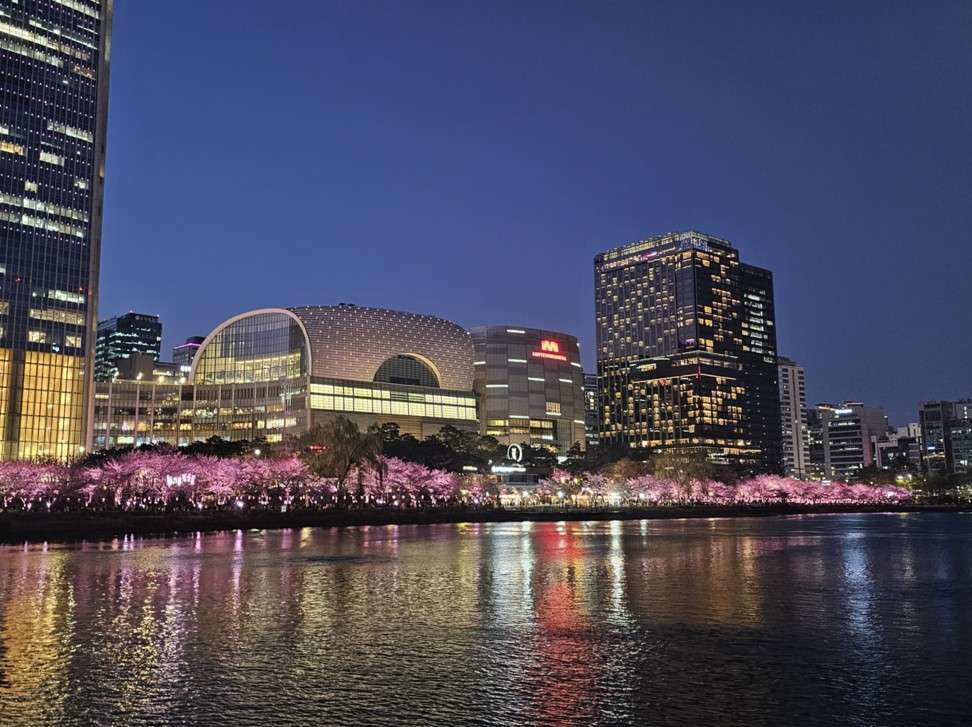
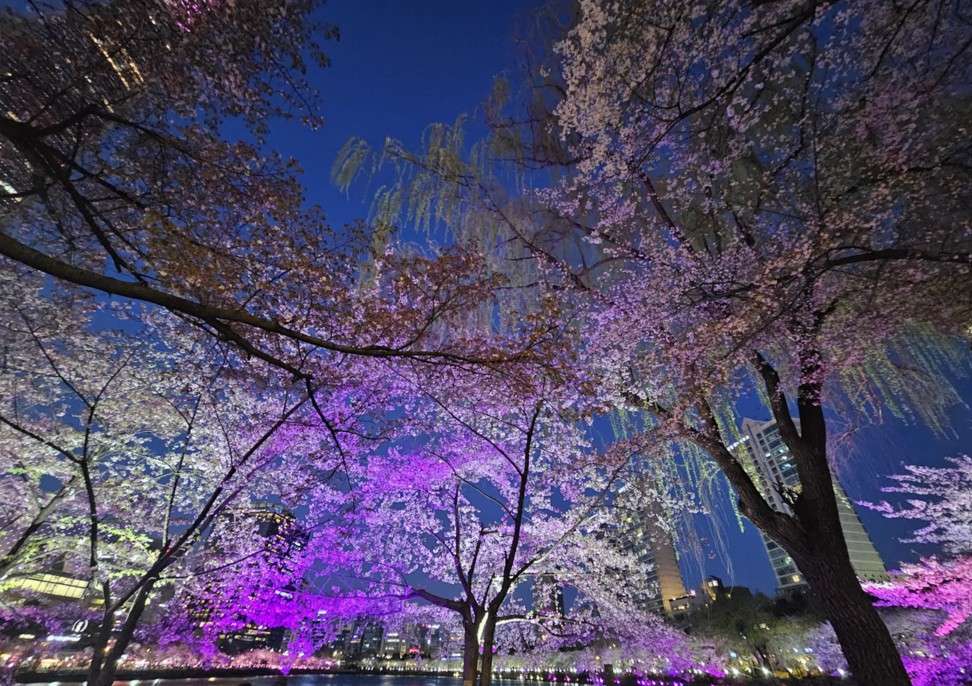
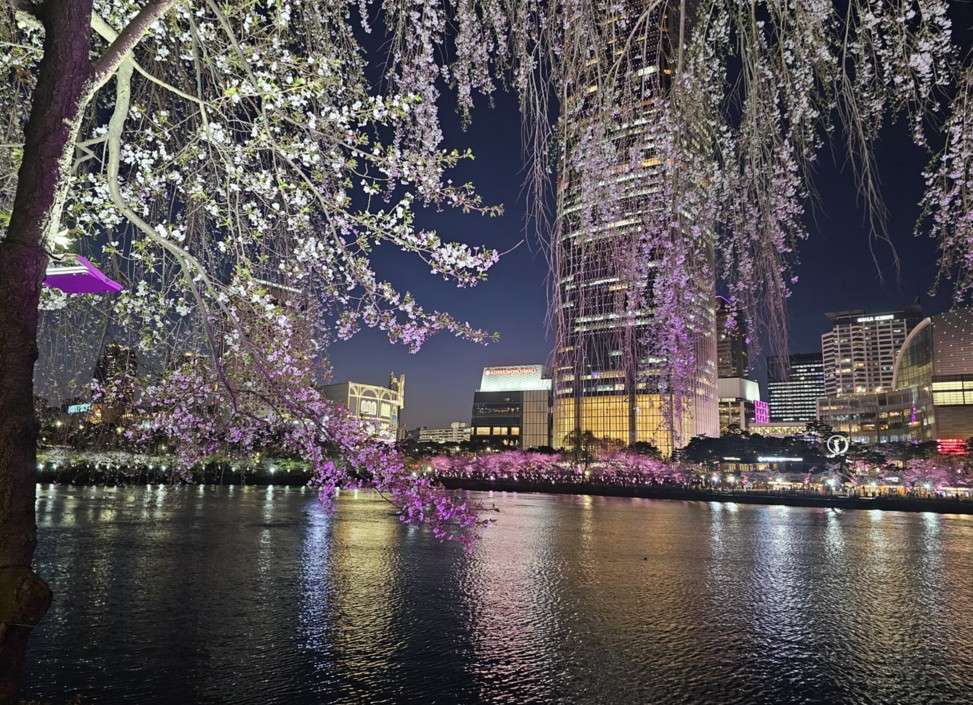
This is the one. Seokchon Lake has the single best cherry blossom backdrop in Seoul — the east lake path frames Lotte World Tower reflected in the water through a tunnel of cherry trees. It is a genuinely striking combination that does not exist anywhere else in Korea: modern landmark, water reflection, and blossoms all in one frame. The west lake loop is quieter and better for an unhurried walk. The full circuit of both lakes takes about an hour at a relaxed pace.
Crowds are real here on weekends — but unlike Yeouido, the lake path is wide enough that it never becomes a standstill. Arrive before 8AM for the reflection shots without people in frame. Evening is also excellent — the tower lights up after dark and the blossom-and-tower night shot is worth staying for. Five minutes walk from Jamsil Station (Line 2 / Line 8).
Namsan (남산), Seoul
The paths around Namsan Mountain are lined with cherry trees and manageable even at peak bloom — most visitors go to N Seoul Tower and miss the walking paths entirely. Cable car up, walk down through the blossoms. Takes two to three hours. Free entry to the mountain paths.
Seoul Forest (서울숲), Seongdong-gu
Known to locals, largely off the foreign tourist radar. Cherry trees near the entrance get busy on weekends but the park is large enough that crowds spread naturally. Five minutes from Ttukseom Resort station on Line 2.
Anyang Art Park (안양예술공원)
A small arts park in Anyang, Gyeonggi-do, about 40 minutes from central Seoul. The cherry tree path along the stream is a genuine local secret — Koreans from the area come here but almost no foreign tourists make the trip. The park has outdoor sculpture installations alongside the blossoms, which makes for a different kind of walk. Low-key, unhurried, and free.
Gyeongui Line Forest Park (경의선숲길), Mapo-gu Seoul
A converted railway line turned linear park running through Mapo and Hongdae neighbourhoods in Seoul. Cherry trees line sections of the path and the atmosphere is local — cafes, young Koreans sitting on the grass, none of the tour group density you get at Yeouido. This is what cherry blossom season actually looks like for people who live in Seoul. Start from Hongdae station and walk toward Yeonnam-dong.
Timing: How to Not Miss It
Cherry blossom season in Korea lasts approximately one to two weeks per location. Peak bloom is when 70-80% of flowers are open — this window is about four to five days. The blooms fall fast after that, especially if rain or wind hits. Planning a trip around cherry blossom requires flexibility or good luck with dates.
| Region | Typical Peak Bloom | Notes |
|---|---|---|
| Jeju Island | Late March | First in Korea, also least crowded |
| Busan / South coast | Late March – early April | Jinhae is in this window |
| Gyeongju / Jeonju | Early to mid-April | Slightly later than coast |
| Seoul | Early to mid-April | Varies year to year by 1–2 weeks |
| Chuncheon / Inland | Mid-April | Last to bloom, good backup option |
The KMA (Korea Meteorological Administration) publishes an annual cherry blossom forecast from early March — search “벚꽃 개화 예보” or check their English site. This is the most accurate source. Travel influencer posts from the prior year are not — bloom timing shifts by up to two weeks depending on winter temperatures.
Practical Tips
Weekday morning is the only strategy that works. Every cherry blossom spot in Korea — including the quiet ones — gets noticeably busier on weekends. Tuesday and Wednesday mornings before 9AM give you the best chance of having a tree-lined path to yourself.
Rain is not a disaster. Light rain during cherry blossom season makes the petals fall slowly and the colours deepen. Most Koreans consider a slightly overcast day with mist better for photography than harsh midday sunshine. Pack a small umbrella and do not reschedule because of drizzle.
The day after peak bloom is worth seeing too. When petals start falling — called beotkkot nunchip (벚꽃 눈) or “cherry blossom snow” — the ground and water surfaces covered in pink and white petals is a different kind of beautiful. Do not write off a trip because you missed peak bloom by a day or two.
Accommodation books out early near famous spots. If you are targeting Jinhae or Gyeongju during peak week, book two to three months ahead. For Seoul alternatives like Seoul Forest or Namsan, same-week booking is usually fine.
Daddy’s Final Note
I have lived here long enough to watch the Yeouido cherry blossom crowd get bigger every year. The trees have not changed. The experience has. The best cherry blossom I have seen in Korea was on a Tuesday morning on the path to Bulguksa in Gyeongju — almost no one else there, old stone and pink petals, completely quiet. It took one hour on the KTX to get there. The most overrated cherry blossom I have seen was Yeouido on a Saturday, shoulder to shoulder with ten thousand people, everyone’s phone in the air. Same country, completely different experience. Go to Gyeongju. You will not regret it.