Quick Answer
- How to visit: Organized tour only — independent access is not permitted
- From Seoul: 1-hour drive north — most tours depart from central Seoul hotels or Hongdae
- Duration: Half day (4–5 hours) for standard DMZ / Full day (7–8 hours) for DMZ + JSA
- Cost: ₩45,000–₩90,000 depending on tour type and inclusions
- JSA (Joint Security Area): Requires advance booking — fills up weeks ahead
- Worth it? Yes — but manage expectations. This is history, not spectacle.
The DMZ is one of the most visited sites in Korea and one of the most misunderstood. People arrive expecting something dramatic — guards facing off across a line, tension you can feel in the air, a glimpse into North Korea. Some of that is there. Much of it is not. What you actually get is a carefully managed historical experience at one of the most significant geopolitical borders on earth. That is genuinely worth your time — if you know what you are walking into.
What the DMZ Actually Is
The Korean Demilitarized Zone is a 4km-wide, 250km-long buffer strip running across the peninsula that has divided North and South Korea since the 1953 armistice. It is not a peace treaty — the Korean War technically never ended. The DMZ is the product of a ceasefire, not a resolution. That distinction matters when you are standing there.
The zone itself is heavily mined and almost entirely off-limits to civilians. What tourists visit is the area immediately south of the DMZ — military installations, observation points, tunnels dug by North Korea, and the JSA at Panmunjom where the two sides have met for negotiations since 1953. You do not enter the DMZ itself. You observe it.
Two Main Tour Types
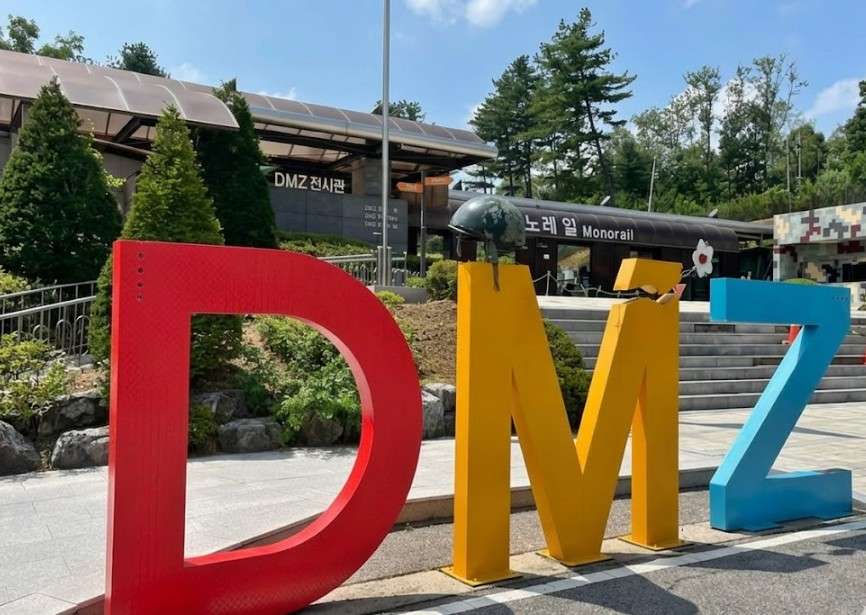
Standard DMZ Tour: Covers the sites south of the DMZ — typically includes Imjingak Park, the 3rd Infiltration Tunnel, Dora Observatory (overlooking North Korea), and Dorasan Station (the southernmost train station, built in anticipation of reunification). This is the accessible version — no special security clearance required, easier to book, available most days.
DMZ + JSA Tour: Includes everything above plus entry into the Joint Security Area at Panmunjom — the blue buildings straddling the military demarcation line where you can technically step into North Korean territory inside one of the conference rooms. This is the more significant experience and the one most people mean when they say they want to “go to the DMZ.” Requires advance booking, passport registration, stricter dress code, and is occasionally cancelled without notice due to political conditions.
| Standard DMZ | DMZ + JSA | |
|---|---|---|
| Duration | 4–5 hours | 7–8 hours |
| Cost | ₩45,000–₩55,000 | ₩70,000–₩90,000 |
| Advance booking | 1–2 days sufficient | 2–4 weeks recommended |
| Cancellation risk | Low | Medium — political conditions |
| Step into North Korea | No | Yes — inside JSA conference room |
| Passport required | Yes | Yes — submitted in advance |
Dad’s Local Tip: Book the JSA tour as early as possible — ideally within the first 24 hours of confirming your Korea travel dates. It fills up faster than people expect, especially in spring and autumn. If it is sold out, the standard DMZ tour is still worth doing. If you can only do one, do JSA.
What You Actually See
Imjingak Park (임진각): The first stop on most tours — a park near the civilian control line with war memorials, a preserved steam locomotive riddled with bullet holes, and the Freedom Bridge used for prisoner exchanges after the war. More emotionally affecting than it sounds. The bridge is simple but the context is heavy.
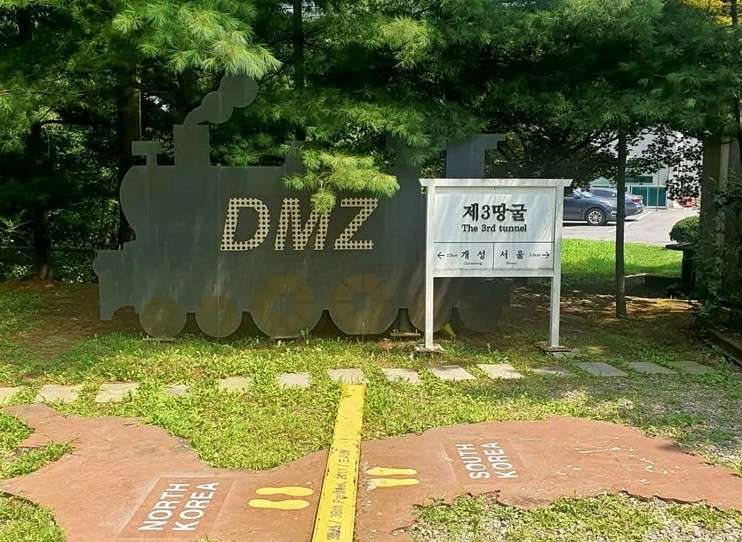
3rd Infiltration Tunnel (제3땅굴): One of four tunnels discovered running from North Korea under the DMZ toward Seoul. This one was found in 1978. You walk down into it — low ceilings, hard hats required, roughly 200 meters in. The tunnel is narrow and cool. What stays with you is the engineering — this was dug in secret, designed to move thousands of soldiers per hour. The scale of the intent is unsettling.
Dora Observatory (도라산 전망대): An elevated observation point overlooking the DMZ and North Korean territory beyond. On clear days you can see Kaesong Industrial Complex and the propaganda village of Kijong-dong. Binoculars are available. What you see is mostly farmland, mountains, and silence. The absence of activity is its own statement.
Dorasan Station (도라산역): A fully functioning train station that goes nowhere — built as a symbol of anticipated reunification, with a platform marked “To Pyongyang.” Trains ran briefly to Kaesong between 2007 and 2008 before cross-border relations deteriorated again. The station is maintained, staffed, and empty. It is one of the stranger places in Korea.
JSA / Panmunjom (판문점): The Joint Security Area where armistice negotiations took place and where both sides maintain a permanent military presence. The blue UN conference buildings sit directly on the military demarcation line. Inside one of them, you can stand on the North Korean side of the line. Korean People’s Army soldiers are visible through the windows. This is the moment most people come for — and it is genuinely significant.
Dad’s Local Tip: At the JSA conference room, do not touch the North Korean soldiers if they enter, do not make gestures toward them, and follow your guide’s instructions exactly. This is not theatrical caution — the rules exist because incidents have happened here. Treat it like the active military installation it is.
Practical Details
What to wear: Smart casual minimum — no ripped jeans, no sleeveless tops, no military-pattern clothing. The JSA tour has a stricter dress code that is enforced. When in doubt, wear what you would wear to a business casual meeting.
Photography: Permitted at most sites with specific restrictions. At JSA, your guide will tell you exactly where and when you can photograph. Follow these instructions — cameras are sometimes confiscated for violations.
What to bring: Passport (mandatory), comfortable shoes for tunnel walking, a light jacket — the tunnel is cool year-round. Cash for optional purchases at Dorasan Station souvenir shop.
Language: Most tours offered in English. Korean-language tours are also available and sometimes cheaper — check the booking platform for options.
Children: Standard DMZ tours are suitable for older children (10+). JSA tours are generally recommended for adults only — the military briefing and environment are not well-suited to young children.
How to Book
Book through established tour operators — Klook and Viator both list reliable DMZ and JSA tours with transparent cancellation policies. Hotel concierge desks in Seoul also arrange tours, sometimes at a slight premium. Avoid booking from street-level hawkers near tourist areas.
For JSA specifically: submit your passport information exactly as it appears in your passport — name discrepancies cause entry denials. Check the tour operator’s cancellation policy carefully — JSA tours do get cancelled due to political conditions with sometimes less than 24 hours notice.
Is It Worth It?
If you approach it as a history and geopolitics experience — yes, unambiguously. The DMZ is unlike any other place on earth. The combination of the tunnel, the observatory, and the JSA gives you a genuine sense of the weight and strangeness of the situation on this peninsula. That weight does not photograph well but it lands in person.
If you approach it expecting drama or visible tension — you may be disappointed. The military presence is professional and controlled. North Korean soldiers at JSA are trained to appear indifferent. The border looks like countryside. The significance is historical and political, not cinematic.
Daddy’s Final Note
I have taken this tour more times than I can count — mostly accompanying foreign visitors who ask to go. Every time, something about standing at Dorasan Station or looking north from the observatory stops me for a moment. Not because it is dramatic. Because it is real, and because most of the world has moved on from the Korean War in a way that the people on this peninsula have not been permitted to. Go with context — read something about the war before you go, not after. The experience lands differently when you understand what you are looking at. And book the JSA if you can. Standing in that blue room is worth the paperwork.