Is Korea good for medical tourism? Yes — world-class facilities, significantly lower costs than the US or UK
English support: Major hospitals in Seoul have dedicated international patient centers
Most popular: Plastic surgery, dermatology, dental, health checkups, eye care
First step: Contact the international patient center of your chosen hospital before arrival
Korea has become one of Asia’s most popular medical tourism destinations — and not just for cosmetic procedures. The combination of internationally trained doctors, modern facilities, relatively affordable costs, and dedicated services for foreign patients makes it genuinely worth considering for a range of medical needs. Here is what you actually need to know before you go.
Why Korea for Medical Tourism
Quality: Korean hospitals consistently rank among the best in Asia. Several Seoul hospitals are Joint Commission International (JCI) accredited — the international standard for hospital quality. Korean doctors frequently train abroad and return with international experience.
Cost: Medical procedures in Korea typically cost 30-70% less than equivalent procedures in the United States, and often less than Western Europe and Australia. This gap is significant for procedures not covered by insurance, elective procedures, and dental work.
Wait times: Significantly shorter than many Western countries for specialist consultations and procedures. In some cases, what would be a 6-month wait in the UK or Canada can be scheduled within days in Korea.
Technology: Korean hospitals invest heavily in medical technology. Robotic surgery, advanced imaging, and minimally invasive procedures are widely available at major hospitals.
What Foreign Visitors Come For
Plastic Surgery and Cosmetic Procedures
Korea is internationally known for plastic surgery — particularly facial procedures. Gangnam district in Seoul has the highest concentration of plastic surgery clinics in the world. The most commonly performed procedures include rhinoplasty, double eyelid surgery, facial contouring, and breast augmentation.
The reputation is well-earned but requires careful research. Clinic quality varies enormously. Always verify surgeon credentials, check before and after photos, and consult multiple clinics before deciding. Recovery time for most procedures is 1-2 weeks minimum — plan your stay accordingly.
Dermatology
Korean dermatology clinics offer a wide range of skin treatments — laser treatments, skin whitening procedures, acne treatment, and anti-aging procedures — at costs significantly lower than Western countries. Seoul has hundreds of dermatology clinics, many with English-speaking staff catering to international patients.
Dental Care
Dental work is one of the most practical reasons to consider medical tourism in Korea. Implants, crowns, veneers, and orthodontics all cost a fraction of US or Australian prices. A dental implant that costs ,000-,000 in the US typically costs 00-,500 in Korea. Quality is high — Korean dental schools are rigorous and equipment is modern.
Health Checkups (건강검진)
Comprehensive health checkup packages are popular with medical tourists. A full-body checkup including blood panels, imaging, cardiac screening, cancer markers, and specialist consultations can be completed in one or two days at a major hospital. The same screening in the US would cost several times more and take significantly longer to arrange.
Eye Care (LASIK / LASEK)
Korea is one of the most popular destinations globally for laser eye surgery. Costs are lower than most Western countries and the technology used is current. Gangnam and Sinchon areas have a high concentration of eye clinics experienced with international patients.
Oriental Medicine (한의학)
Traditional Korean medicine — acupuncture, herbal medicine, cupping — is practiced alongside conventional medicine and is covered by Korean national health insurance for residents. Foreign visitors can access licensed Oriental medicine clinics throughout Seoul for treatments ranging from general wellness to specific conditions.
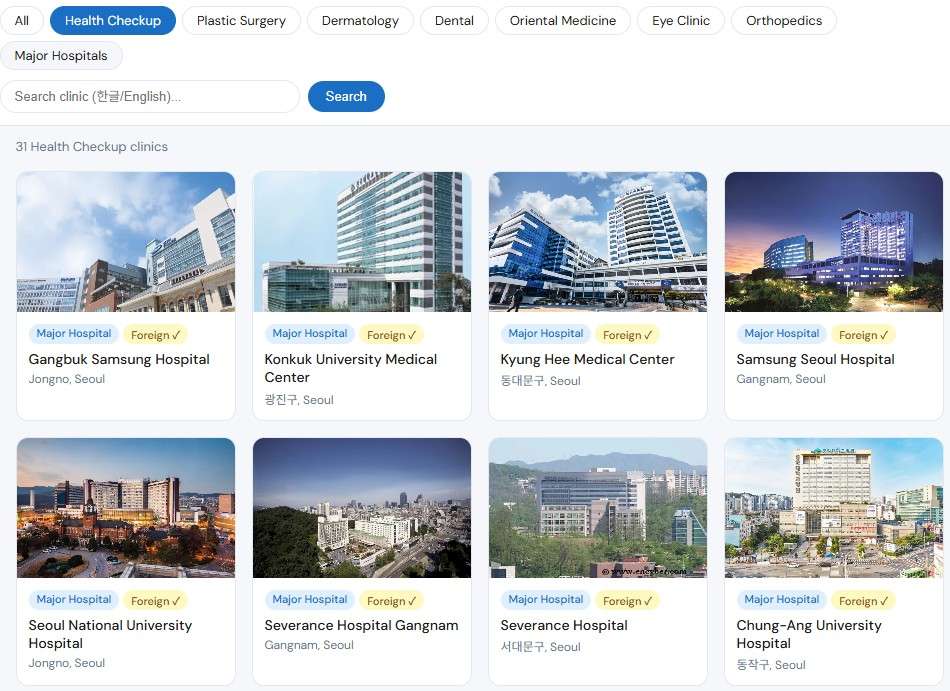
Major Hospitals With International Patient Centers
These hospitals have dedicated departments for foreign patients — English-speaking coordinators, translation services, and experience handling international medical records and insurance:
Hospital
Location
Known For
Seoul National University Hospital
Jongno-gu
General, oncology, research
Samsung Medical Center
Gangnam-gu
Cancer, cardiac, general
Severance Hospital (Yonsei)
Seodaemun-gu
General, transplant, robotic surgery
Asan Medical Center
Songpa-gu
Organ transplant, cardiac
Korea University Anam Hospital
Seongbuk-gu
General, neurology
These are large university hospitals. For cosmetic procedures, dental, and dermatology, specialist clinics in Gangnam are typically the more relevant option — the major hospitals above focus primarily on serious medical conditions.
Practical Things to Know Before You Go
Contact the Hospital Before Arrival
Major hospitals with international patient centers can arrange consultations, provide cost estimates, assist with medical record translation, and coordinate your visit before you arrive in Korea. Do this first — walk-in international patient visits are possible but pre-arranged visits go significantly more smoothly.
Bring Your Medical Records
If you are coming for a specific medical reason, bring relevant records — previous test results, imaging files, medication lists, and any specialist reports. Korean doctors will conduct their own assessments but prior records save time and improve the quality of the consultation.
Language
At major hospitals, English is manageable — international patient centers have coordinators specifically for this. At smaller clinics, English availability varies. Papago translation app handles medical vocabulary reasonably well. For complex medical consultations, professional medical interpretation is worth arranging in advance.
Payment
Most hospitals and clinics accept international credit cards. Major hospitals can provide itemized receipts in English for insurance reimbursement. Bring your travel insurance documentation and verify coverage for the specific procedure before arrival — most standard travel insurance policies do not cover elective procedures.
Recovery Time
Build recovery time into your itinerary. A health checkup needs no recovery. Dental work may need a few days. Cosmetic surgery requires weeks. Do not book a flight two days after a significant procedure — recovery complications are harder to manage once you have left Korea.
Medical Tourism Agencies
Several agencies in Korea specialize in coordinating medical tourism for foreign visitors — arranging hospital appointments, translation, accommodation near the hospital, and airport transfers. The Korea Tourism Organization maintains a list of registered medical tourism facilitators at visitmedicalkorea.com. Using a registered facilitator adds a layer of accountability that an unregistered agent does not provide.
Realistic Expectations
Korea’s medical tourism reputation is largely well-deserved but some caveats apply:
Research your specific clinic or doctor, not just the country’s general reputation
Cosmetic surgery outcomes vary by surgeon — credentials and experience matter more than clinic marketing
Cost savings are real but factor in flights, accommodation, and recovery stay when calculating total cost
Follow-up care after returning home may be limited — consider this for procedures that require ongoing monitoring
Looking for Specific Clinics?
For a directory of English-friendly medical clinics and hospitals in Korea sorted by specialty and location, visit our dedicated resource: Korea Medical Guide — KoreaDaddy →
Daddy’s Final Note
I have used Korean hospitals and clinics regularly for years. The quality is real — not marketing. The international patient centers at major hospitals are genuinely set up to help foreign visitors navigate what can otherwise be a confusing system. If you are considering any medical procedure and cost or wait time is a factor, Korea is worth researching seriously. Do your homework on the specific doctor or clinic, arrange things in advance, and build enough time into your trip for whatever you are having done.
Note: This post is for general information only. Always consult a qualified medical professional before making any medical decisions.