Quick Answer
- What it is: Pork bone broth soup served with rice — eaten together or mixed in the bowl
- Price: ₩8,000–₩11,000 per bowl including side dishes
- Best place: Busan — this is where it originated and where the best versions are
- Available in Seoul: Yes — a few reliable spots, but not the same as Busan
- Spice level: The soup itself is mild — heat comes from the yangnyeom (spiced paste) added at the table
What Is Dwaeji Gukbap?
Dwaeji gukbap (돼지국밥) literally means pork rice soup. It is a Busan specialty — a slow-cooked pork bone broth served with sliced boiled pork, rice, and a selection of condiments. The broth is rich and milky from hours of simmering pork bones, with a depth that takes time to build. The soup arrived in Busan after the Korean War. Displaced people from all over the peninsula ended up in Busan, and cheap pork — previously less valued than beef in Korean cuisine — became the foundation of a new local food culture. What started as cheap wartime food became one of Korea’s most respected regional dishes. That history is in every bowl.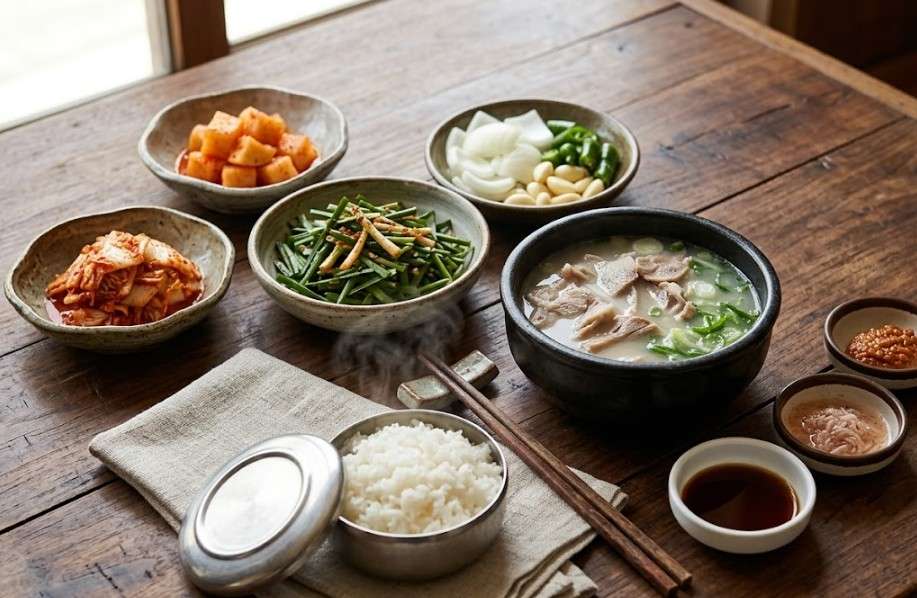
How to Eat It
There are two camps on this and Koreans argue about it. The first way: pour the rice directly into the broth and eat it as one mixed bowl. The second way: eat the rice separately, alternating bites with spoonfuls of soup. Both are correct — do whatever makes sense to you. The condiments on the table are important. You will usually get:- Yangnyeom (양념) — a fermented spiced paste. Add this to the broth for heat and depth. Start with a small spoonful and adjust.
- Saeujeot (새우젓) — salted fermented shrimp. A small amount added to the soup lifts the flavor significantly. This is the move that separates locals from first-timers.
- Buchu (부추) kimchi — chive kimchi, served as a side. Sharp and fresh, cuts through the richness of the broth.
- Doenjang (된장) — fermented soybean paste, for dipping the pork slices.
Dad’s Local Tip: Add the saeujeot first, before anything else. Just a small pinch. It does not make the soup taste like shrimp — it makes the pork flavor deeper and more complete. Most foreigners skip this and wonder why their bowl is missing something.
Busan: Where to Eat Dwaeji Gukbap
The best dwaeji gukbap in Korea is in Busan, and within Busan, the highest concentration of serious gukbap restaurants is in the Seomyeon and Gukje Market areas. These are not tourist restaurants — they are places that have been serving the same dish to the same neighborhood for decades. Seomyeon (서면): The commercial center of Busan has a cluster of well-regarded gukbap restaurants within walking distance of Seomyeon station. Look for places that open early — real gukbap restaurants serve breakfast. If a place only opens at lunch, that is already a signal. Gukje Market area (국제시장): The traditional market in Jung-gu has several old-school gukbap spots tucked into the side streets. Eat here and then walk through the market afterward — the combination makes for a proper Busan morning. Haeundae (해운대): The tourist beach area has options but they are more expensive and less consistent. If you are based in Haeundae, travel to Seomyeon for the real version — it is 20 minutes on the subway.
Dad’s Local Tip: The best gukbap restaurants in Busan open at 6AM or 7AM and run until they sell out — sometimes by early afternoon. Go for breakfast or an early lunch. A restaurant that only appears at dinner is likely catering to tourists rather than locals.
Seoul: Dwaeji Gukbap Without Going to Busan
If you are based in Seoul and cannot make the trip south, there are a handful of places doing a respectable version. It will not be the same — the broth culture in Busan has decades of refinement that Seoul versions do not fully replicate — but it is a legitimate way to try the dish. Look for restaurants in Seoul that specifically advertise “Busan-style” (부산식) dwaeji gukbap. The ones run by people who actually moved from Busan tend to be the most consistent. Neighborhoods with higher concentrations include Mapo-gu and areas around Noryangjin. The Seoul versions are typically a little cleaner and slightly less complex in flavor — they suit people who want to try the dish without committing to the full Busan intensity. A good starting point before you make the trip south.Price Breakdown
| Item | Price |
|---|---|
| Basic dwaeji gukbap (pork only) | ₩8,000–₩9,000 |
| Mixed version (with organs) | ₩9,000–₩10,000 |
| Special / premium cut | ₩10,000–₩12,000 |
| Extra rice | ₩500–₩1,000 |
| Side dishes | Included — free refills standard |