Quick Answer
- Getting there: 1 hour flight from Seoul — no passport needed for Koreans, visa-free for most foreigners
- How long: 3-4 days minimum to see the highlights
- Transport: Rent a car — public transport exists but a car is far more practical
- Best time: Spring (April-May) and autumn (September-October)
Jeju is South Korea’s largest island and its most popular domestic destination. About 15 million people visit every year — mostly Koreans. Foreign visitors who make the trip consistently say it was one of the highlights of their Korea visit. Here is what you need to know before you go.
This jeju island guide for first-time visitors covers everything you need before you go — transport, what to see, where to eat, and how long to stay.

Getting to Jeju
By plane: The most practical option. Flights from Gimpo Airport (Seoul) take about 1 hour. From Incheon Airport approximately 1 hour 10 minutes. Korean Air and Asiana fly the route, as do budget carriers Jeju Air, T’way, Jin Air, and Air Busan. Budget carrier fares start from around ₩30,000-₩50,000 one way if booked in advance — comparable to a KTX ticket but gets you to an island.
Book through the airline websites directly or through Naver Flight for price comparison. Jeju Air and T’way often have the cheapest fares on this route.
By ferry: Ferries run from Mokpo, Wando, and other southwest coast ports. Journey time 1.5-4 hours depending on departure point. Significantly slower than flying but a different experience — worth considering if you are already traveling the south coast.
Getting Around Jeju
Rent a car — strongly recommended. Jeju’s highlights are spread across the island and public transport connections between them are slow and infrequent. A rental car transforms what you can see in a day. International driving license accepted. Rental from around ₩40,000-₩70,000 per day. Book in advance during peak season.
Scooter rental: Popular option for solo travelers. Around ₩30,000-₩50,000 per day. Good for coastal roads on dry days. Less practical for mountain routes or rainy weather — Jeju gets significant rainfall.
Public buses: Jeju has a reasonable intercity bus network connecting major towns and some tourist sites. Slower and less flexible than a car but works for budget travelers willing to adjust their itinerary around bus schedules. The 820 and 830 circular bus routes cover the island perimeter.
Taxis: Available and metered. Useful for specific destinations from Jeju City or Seogwipo. Less practical for exploring multiple sites in one day.
Jeju has two main bases:
Jeju City (제주시) — north: The main city, largest accommodation selection, closest to the airport. Good base if you want city amenities and easy access to the northern and eastern parts of the island.
Seogwipo (서귀포) — south: Smaller, more relaxed, closer to the southern coast attractions including Cheonjiyeon and Jeongbang waterfalls. Better base if your itinerary focuses on the south coast and Hallasan mountain.
For a 3-4 day trip, picking one base and driving to both sides works well. The island is not large — north to south takes about 45 minutes by car.
What to See and Do
Hallasan National Park
Hallasan is a dormant volcano and the highest mountain in South Korea at 1,950m. The summit trail (Seongpanak or Gwaneumsa route) takes 4-5 hours up, 3-4 hours down — a full day commitment. Shorter trails offer crater lake views and forest walking without the full summit climb. Entry to the national park is free. Trail permits are required for summit routes — book in advance through the Jeju National Park reservation system.
Jeju Olle Trails
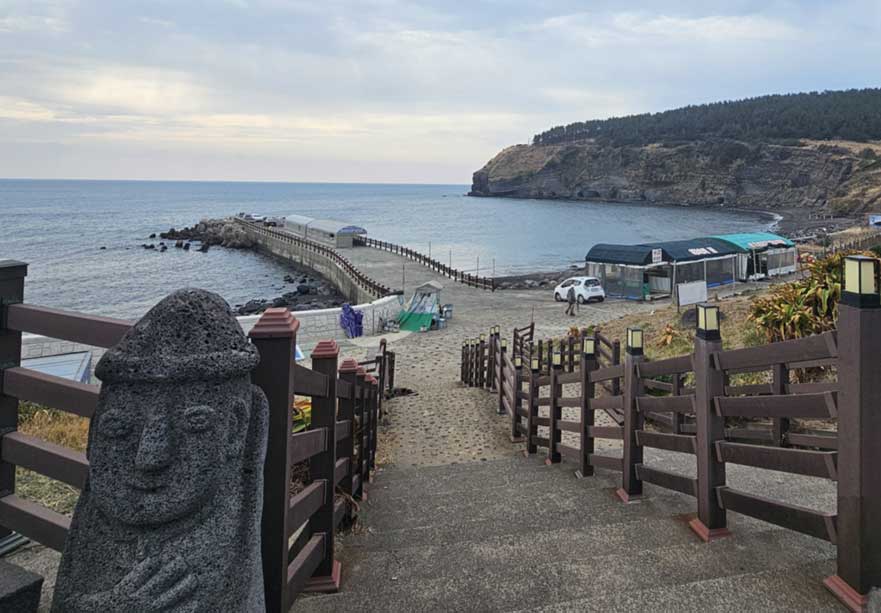
A network of 26 coastal and inland walking routes totaling over 400km. The Olle trails are what makes Jeju genuinely special for walkers — coastal paths with lava rock formations, windbreaks made from black volcanic stone, tangerine orchards, and sea views. Trail 7 and Trail 10 are consistently rated the most scenic. Each trail section takes 3-5 hours. Free to walk, small donation boxes at start points.
Seongsan Ilchulbong (성산일출봉)
A volcanic tuff cone rising 180m from the sea on the eastern tip of Jeju. The sunrise view from the crater rim is famous — arrive before dawn if you want it. Entry ₩2,000. The hike to the rim takes about 20 minutes. The surrounding Seongsan village has good haenyeo (female free diver) diving shows and fresh seafood restaurants.
Manjanggul Lava Tube
One of the longest lava tubes in the world at 13.4km, of which about 1km is open to visitors. Walking through the tube — volcanic formations, natural columns, the famous lava column that is one of the largest in the world — takes about 1 hour. Entry ₩4,000. Bring a light layer — the cave stays at 11-12 degrees Celsius year round.
Haenyeo (해녀) — Female Free Divers
Jeju’s haenyeo are UNESCO-listed female free divers who have been harvesting seafood from the sea without breathing equipment for centuries. You can watch diving demonstrations at Seongsan and other coastal villages. The seafood they bring up — sea urchin, abalone, shellfish — is sold fresh at stalls near the diving areas. Worth seeking out both for the experience and for the food.
Jeju Black Pork (흑돼지)
Jeju’s black pig is a local breed with a distinct flavor — darker meat, more fat, stronger taste than regular pork. Eating black pork samgyeopsal in Jeju is considered essential by Koreans. The main black pork restaurant street (돔베고기 골목) is in Jeju City near the old town. Expect to pay ₩20,000-₩30,000 per portion — more expensive than Seoul samgyeopsal but noticeably different.
Waterfalls
Cheonjiyeon (천지연): Near Seogwipo city center. 22m waterfall into a deep pool. Best visited at night when it is lit up. Entry ₩2,000.
Jeongbang (정방): One of the few waterfalls in Asia that falls directly into the sea. 23m drop. Entry ₩2,000. Impressive after rainfall.
Cheonjeyeon (천제연): Three-tiered waterfall complex with a stone bridge. Lush vegetation. Entry ₩2,500.
Jeju Food Worth Eating
| Food | What It Is | Where to Find It |
|---|---|---|
| 흑돼지 (Black pork) | Local breed samgyeopsal, richer flavor | Black pork street, Jeju City |
| 갈치조림 (Braised cutlassfish) | Jeju specialty fish stew, spicy | Any local restaurant |
| 전복죽 (Abalone porridge) | Haenyeo-caught abalone in rice porridge | Coastal restaurants, markets |
| 한라봉 (Hallabong) | Jeju tangerine variety, sweet and juicy | Roadside stalls, markets everywhere |
| 빙수 (Bingsu) | Shaved ice dessert — Jeju green tea version famous | Osulloc Tea Museum area cafes |
Best Time to Visit Jeju
Spring (April-May): Canola flower fields turn the island yellow in late March and April. Cherry blossoms follow. Comfortable temperatures, generally good weather. The best single season for first-time visitors.
Summer (June-August): Beach season — Hamdeok and Hyeopjae beaches are excellent. Hot and humid like the mainland. Typhoon season peaks July-September — check forecasts before travel during this period.
Autumn (September-October): Second best season. Hallasan hiking is excellent in autumn foliage. Temperatures comfortable. Less crowded than spring.
Winter (November-February): Jeju is significantly milder than Seoul in winter — rarely below freezing. Some trails close due to snow on Hallasan. Quietest period with lowest prices. Good for those who want the island with fewer people.
How Many Days Do You Need
| Duration | What You Can See |
|---|---|
| 2 days | Seongsan, one Olle trail, black pork dinner |
| 3 days | Above plus Manjanggul, Hallasan day hike (short route), waterfalls |
| 4-5 days | Full island coverage including Hallasan summit, multiple Olle trails, relaxed pace |
Practical Tips
- Book accommodation early — Jeju fills up fast during Korean public holidays, spring canola season, and summer. Prices spike significantly during peak periods.
- Hallasan summit permits must be booked in advance online — same-day entry is not available for summit trails.
- Jeju weather changes fast — mountain weather especially. Check forecasts daily and carry a rain layer regardless of the morning sky.
- Jeju has its own dialect — Jeju-eo is distinct enough that some mainland Koreans find it difficult to understand. English is spoken at major tourist sites. Papago handles standard Korean fine.
- Tangerines are everywhere — buy them from roadside stalls rather than supermarkets. Fresher and cheaper. A bag of hallabong from a roadside stall costs ₩5,000-₩10,000.
Daddy Final Note
Jeju rewards people who slow down. The temptation is to drive between attractions and tick boxes. The better version of a Jeju trip involves walking an Olle trail for half a day, eating haenyeo seafood for lunch, watching the sunset from the coast, and eating black pork for dinner. The island is not large — you do not need to see everything to have a good trip. Pick fewer things and do them properly.