Quick Answer
- What it is: Black goat slow-cooked into a concentrated broth — eaten as soup, extract, or drink
- Price: ₩12,000–₩18,000 per bowl (restaurant) / ₩30,000–₩80,000 for packaged extract
- Taste: Rich, gamey, deeply savory — stronger than beef bone broth
- Who eats it: People recovering from illness or surgery, elderly for stamina, anyone needing serious physical restoration
- Best region: Jeju Island and South Jeolla Province — highest concentration of quality restaurants
Heukgyeomso (흑염소) — black goat — sits at the top of Korea’s boyang food hierarchy. Above samgyetang. Above chueotang. When a Korean family member has had surgery, finished chemotherapy, or is simply running on empty after months of overwork, this is what gets brought to the hospital. Not flowers. Not fruit baskets. A container of heukgyeomso extract. That is the level of seriousness Koreans attach to this ingredient.
What Is Heukgyeomso?
Heukgyeomso (흑염소) literally means black염소 (goat). The black goat breed used in Korean traditional medicine is considered significantly more potent than regular goat — higher in iron, minerals, and the compounds that Korean medicine associates with stamina and recovery. The animal is smaller and leaner than the white goats common in Western cooking, and the meat has a stronger, more concentrated flavor.
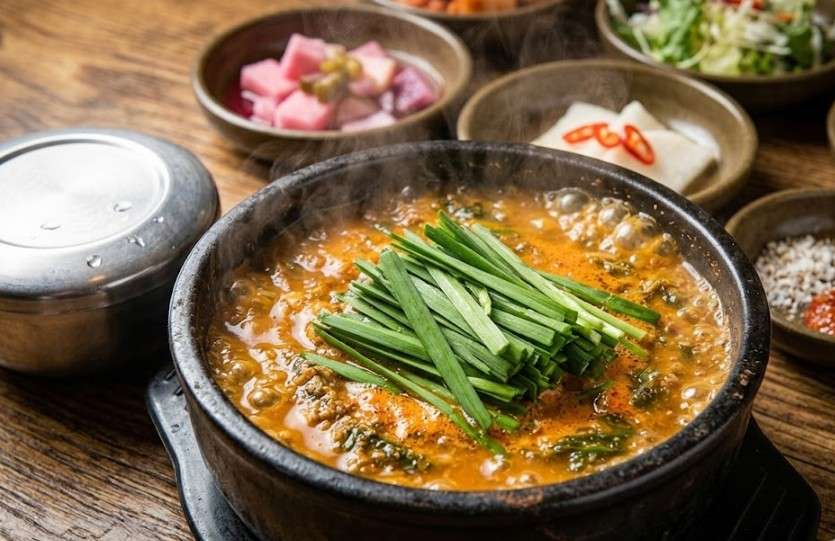
The most common preparation is 흑염소탕 (heukgyeomso-tang) — a long-simmered soup using the bones and meat, seasoned with ginger, garlic, perilla seeds, and various medicinal herbs depending on the recipe. The broth turns dark and deeply concentrated after hours of cooking. Some preparations reduce it further into a thick extract (진액) that is taken in small amounts like a tonic rather than eaten as a meal.
Korean traditional medicine classifies heukgyeomso as a warming food with strong 보양 (boyang) properties — meaning it actively restores and strengthens rather than simply providing nutrition. It is prescribed specifically for people who are physically depleted, have poor circulation, or need to rebuild after illness.
The Health Case
| Nutrient / Compound | Benefit in Korean Traditional Medicine |
|---|---|
| Iron | Significantly higher than regular goat or beef — anemia recovery |
| Protein | Lean, complete protein — muscle recovery and rebuilding |
| Collagen | Joint health, skin elasticity, connective tissue repair |
| Zinc | Immune function, testosterone support |
| Warming compounds | Improves circulation, particularly in extremities |
| Medicinal herbs (added) | Varies by recipe — commonly includes astragalus, angelica root, wolfberry |
Modern nutritional analysis supports several of these traditional claims. Black goat meat is genuinely higher in iron and lower in fat than most red meats. The long-simmered bone broth component adds collagen and minerals in the same way that any properly made bone broth does. Whether the specific black goat breed is meaningfully superior to white goat is debated — but the base nutritional case for heukgyeomso as a recovery food is solid.
Forms: How It’s Consumed
탕 (Tang) — Soup form: The most common restaurant version. A large bowl of dark broth with pieces of goat meat, served with rice and side dishes. This is the accessible entry point — a meal, not a medicine.
진액 (Jinae) — Concentrated extract: The broth reduced to a thick, syrup-like liquid and packaged in small pouches or glass bottles. Taken in small amounts — one pouch per day — over a period of weeks. This is the serious medical version. Sold at oriental medicine clinics, health food stores, and traditional markets. Expensive but considered the most potent delivery method.
즙 (Jeup) — Pressed juice form: Less common, similar to the extract but processed differently. Found mainly at specialty health food stores.
Dad’s Local Tip: If someone in Korea offers you heukgyeomso extract after you have been sick or are visibly exhausted — accept it. It means they are taking your recovery seriously. Refusing is mildly insulting in the same way refusing someone’s home cooking is. Drink it. It tastes strong but it works.
What It Tastes Like
Honest answer: it is an acquired taste. The broth is dark, rich, and gamey — noticeably stronger than beef bone broth, with a slightly bitter herbal undertone from the medicinal additions. People who enjoy strong flavors, lamb, or organ meats tend to appreciate it immediately. People who prefer mild food will find it intense.
The restaurant soup version is more approachable than the extract. The extract is concentrated to a point where the flavor is almost medicinal — which is exactly what it is meant to be. You are not eating it for pleasure. You are eating it because your body needs it.
Adding perilla powder (들깨가루) and a small amount of salt at the table softens the gamey edge significantly. Eat it with rice and the provided kimchi — the acidity of kimchi balances the richness of the broth in the same way it does with samgyetang.
Dad’s Local Tip: Order 흑염소탕 at a restaurant that specializes in it — not a place that has it as one of fifteen items on the menu. A specialist restaurant will have been sourcing the same black goat supplier for years and the difference in broth depth is significant. Look for restaurants where the menu is essentially just variations of heukgyeomso.
Where to Eat Heukgyeomso
Jeju Island: Black goat farming has deep roots in Jeju and the island has the highest concentration of quality heukgyeomso restaurants in Korea. If you are visiting Jeju, this is a legitimate reason to seek it out — the Jeju version uses locally raised animals and the quality gap versus mainland restaurants is noticeable.
South Jeolla Province (전남): Strong food culture and traditional medicine heritage make this region another reliable destination for heukgyeomso. Suncheon and Gwangju both have well-regarded specialist restaurants.
Seoul — Dongdaemun and Jongno area: The older commercial districts of Seoul have established heukgyeomso restaurants catering to an older clientele. Less atmosphere than Jeju or Jeolla but convenient if you are Seoul-based.
Oriental medicine clinics (한의원): For the extract form, a licensed oriental medicine clinic (hanuiwon) will prepare a customized heukgyeomso extract prescription. More expensive than packaged versions but tailored to your specific condition. Clinics in Korea are straightforward to visit — many have basic English capability or translation available.
Heukgyeomso vs Other Boyang Foods
| Food | Main Benefit | Intensity | Best For |
|---|---|---|---|
| 삼계탕 Samgyetang | Energy, immunity | Mild | Summer fatigue, general wellness |
| 추어탕 Chueotang | Calcium, bone health | Medium | Bone density, physical recovery |
| 흑염소 Heukgyeomso | Stamina, blood, circulation | Strong | Post-illness, surgery recovery, serious depletion |
| 장어 Jangeo (eel) | Stamina, liver health | Medium | Summer energy, liver support |
| 홍삼 Hongsam (red ginseng) | Immunity, concentration | Strong | Chronic fatigue, immunity maintenance |
Daddy’s Final Note
Heukgyeomso is not food you eat because you are curious. You eat it because something in your body needs rebuilding. I have seen it brought to hospital rooms more times than I can count — always by someone who grew up understanding that recovery is not passive, that what you put in your body during the hardest weeks determines how completely you come back. Foreign visitors who try heukgyeomso at a good restaurant in Jeju or Jeolla will either immediately understand why Koreans take it seriously, or they will find it too strong and move on. Both outcomes are fine. But if you are in Korea and you are tired in the deep way — not just one bad night, but weeks of depletion — find a specialist restaurant, order the soup, add the perilla powder, and eat the whole bowl. See what happens the next morning.