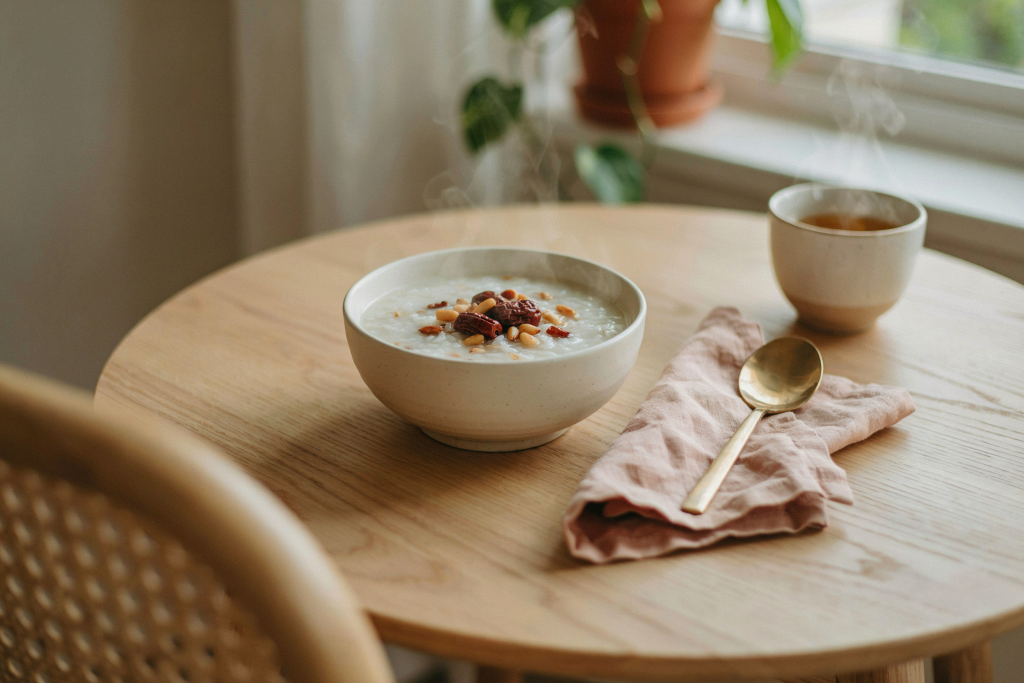
In Korea, juk (죽) is what you eat when your body needs a reset. Sick with a cold — juk. Recovering from surgery — juk. Stomach upset after a night out — juk. New year’s morning when you want something gentle — juk. It is the Korean equivalent of chicken soup, congee, and comfort food all in one bowl. And unlike many health foods, it is genuinely delicious.
What Juk Actually Is
Juk is rice porridge made by cooking rice with a large amount of water or broth for an extended time — typically 30 minutes to several hours depending on the variety. The rice breaks down almost completely, creating a smooth, thick consistency somewhere between soup and porridge. The texture is gentle on the stomach, easy to digest, and warming in a way that feels restorative rather than heavy.
Korean juk is different from Chinese congee (which uses similar technique) primarily in its flavor profile and the range of ingredients used. Korean versions tend to be more subtly flavored, relying on the natural sweetness of the main ingredient — pumpkin, sesame, abalone — rather than heavy seasoning. It is served with small side dishes and eaten slowly.
Why Koreans Eat Juk for Recovery
The reasoning behind juk as recovery food is practical and well-founded. When the body is fighting illness, digestion takes energy away from immune function. Juk requires almost no digestive effort — the long cooking process has already broken down the complex carbohydrates, making nutrients immediately available without taxing the stomach.
The ingredients in different varieties add specific benefits:
Abalone juk (전복죽): Abalone is high in protein, zinc, and iodine — traditionally associated with recovery from illness and childbirth in Korea
Pumpkin juk (호박죽): Rich in beta-carotene, vitamin A, and natural sugars — gentle sweetness, anti-inflammatory properties
Sesame juk (깨죽): High in calcium, healthy fats, and antioxidants — warming, particularly good in cold weather
Pine nut juk (잣죽): Rich in healthy fats and vitamin E — considered one of the most nourishing varieties
Korean hospitals serve juk to post-operative patients as the first solid food after surgery. It is one of the first foods given to infants. Korean grandmothers make it for family members who are unwell. The cultural weight behind juk as a healing food is backed by genuine nutritional logic.
Types of Juk Worth Knowing
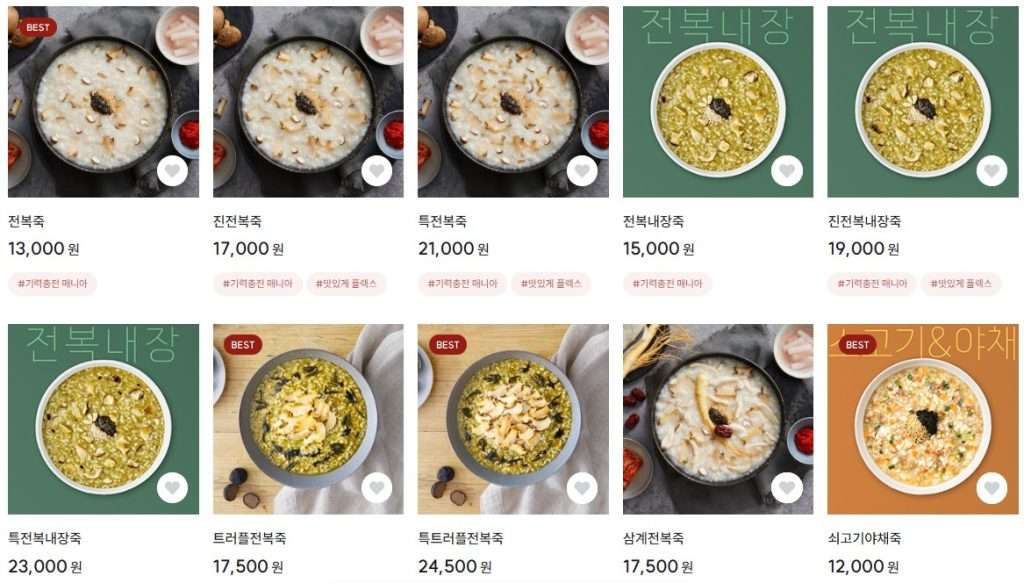
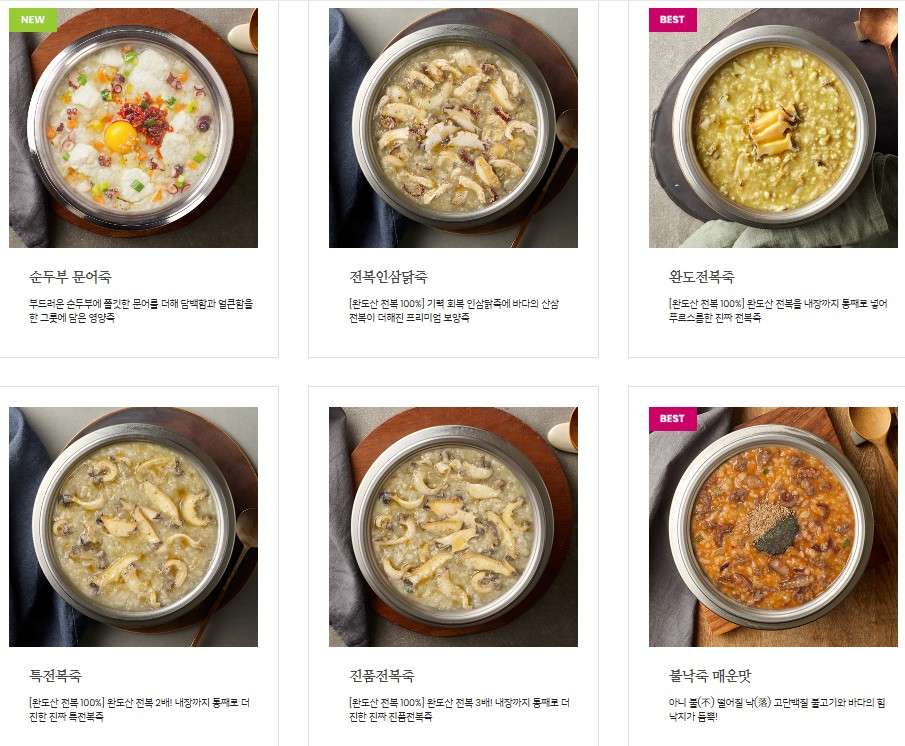
Jeonbok Juk (전복죽) — Abalone Porridge
The most prestigious variety. Whole abalone slow-cooked with rice until the abalone is tender and the broth takes on a deep, oceanic richness. The rice is often cooked in the abalone’s own liquid, giving it a distinctive savory depth. Finished with a few drops of sesame oil. More expensive than other varieties — ₩12,000–₩18,000 — but worth trying at least once. Jeju Island is the best place to eat it, where fresh haenyeo-caught abalone is used.
Hobak Juk (호박죽) — Pumpkin Porridge
The most popular and widely eaten variety. Korean pumpkin (단호박, kabocha squash) is pureed and cooked with rice flour into a thick, naturally sweet orange porridge. Small rice cake balls (새알심) are added — they provide texture contrast and make the bowl more filling. Comforting, mildly sweet, and one of the more approachable varieties for first-timers. Available at every juk restaurant and most convenience stores in cup form.
Yachae Juk (야채죽) — Vegetable Porridge
A light, clean porridge with diced vegetables — carrot, zucchini, mushroom, onion — cooked into the rice base. The mildest and most easily digestible variety. The standard choice when stomach issues are the specific problem. Available everywhere.
Dakjuk (닭죽) — Chicken Porridge
Chicken slow-cooked until falling apart, shredded, and mixed back into the rice porridge. Seasoned simply with sesame oil, salt, and green onion. The Korean equivalent of chicken soup for recovery — warming, protein-rich, deeply comforting. Made at home more often than ordered at restaurants but available at most juk chains.
Jatjuk (잣죽) — Pine Nut Porridge
Ground pine nuts cooked into a pale, creamy white porridge. Delicate flavor, subtle nuttiness, exceptionally smooth texture. Considered one of the most refined varieties — historically associated with royal court cuisine. Not sweet, not savory — somewhere elegantly in between. Harder to find than the popular varieties but worth seeking out at dedicated juk restaurants.
Heukimja Juk (흑임자죽) — Black Sesame Porridge
Ground black sesame cooked into rice porridge — deep grey-black color, rich nutty flavor, high in calcium and antioxidants. One of the most nutritionally dense varieties. Popular with older Koreans as a regular health food. The color looks unusual but the flavor is genuinely excellent.
Ogok Juk (오곡죽) — Five Grain Porridge
A mixture of five grains — rice, barley, millet, sorghum, and beans — cooked together. Eaten traditionally on Daeboreum (the first full moon of the lunar new year) as a health ritual. Higher in fiber and nutrients than plain rice porridge. Slightly nutty, slightly earthy flavor.
Where to Eat Juk in Korea
Bonjuk (본죽) — Best Chain Option
Korea’s most well-known juk chain with hundreds of locations nationwide. Consistent quality, English menu available at many locations, wide variety of options. If you are unfamiliar with juk and want a reliable first experience without hunting for a specialty restaurant, Bonjuk is the practical choice. Prices ₩8,000–₩15,000 depending on variety. Find locations at bonjuk.com.
Juk Story (죽이야기) — Second Major Chain
Similar to Bonjuk in concept and quality. Another nationwide chain worth knowing about. Slightly different menu focus — good for comparison if you end up eating juk multiple times during your visit.
Traditional Juk Restaurants
In older neighborhoods — Insadong, Bukchon, traditional market areas — small independent juk restaurants have been serving the same recipes for decades. These are harder to find but produce noticeably more complex flavors than chains. The jeonbok juk (abalone) at small traditional restaurants near Gwangjang Market or in Insadong is worth seeking out if this is a priority.
Jeju Island — Best Abalone Juk
If your itinerary includes Jeju, eating jeonbok juk there is a different experience from the mainland. Jeju haenyeo (female free divers) harvest abalone from the sea and it goes directly into restaurant kitchens. The freshness is noticeable. Most coastal restaurants in Jeju serve jeonbok juk — look for restaurants near the haenyeo diving demonstration areas in Seongsan and Udo Island.
Juk at Korean Convenience Stores
CU, GS25, and 7-Eleven all carry cup juk — microwaveable portions of hobak juk and yachae juk. Around ₩2,000–₩3,000. Not a replacement for restaurant juk but a genuinely useful option when you are unwell and do not want to go out, or need something gentle before a long travel day. The convenience store hobak juk is better than it has any right to be.
How Juk Is Served
Juk is served in a stone or ceramic bowl, hot, with a small spoon (not chopsticks — the consistency requires a spoon). It comes with small side dishes — typically kimchi, pickled radish, and sometimes a seasoned vegetable. The side dishes provide contrast to the mild porridge.
Eat slowly. Juk is not a quick meal — it is designed to be consumed at a pace that allows the warmth to do its job. Koreans do not rush juk.
Making Juk at Home
If you have access to a kitchen during your stay, juk is one of the simplest Korean dishes to make. Basic yachae juk requires only rice, water, diced vegetables, sesame oil, and salt. Simmer on low heat for 40 minutes, stirring occasionally, until the rice completely breaks down. The result is better than most convenience store versions and takes minimal skill.
Daddy’s Final Note
Most foreign visitors to Korea never try juk unless they get sick. That is a shame because it is one of the more genuinely pleasurable eating experiences here — not exciting in the way Korean BBQ or street food is exciting, but satisfying in a deeper way. A bowl of jeonbok juk on a cold morning, or hobak juk with its small rice cake balls in the evening, is the kind of food that makes you understand why Koreans talk about food as care. Try it before you need it for recovery purposes. You will appreciate it more that way.